Glopal
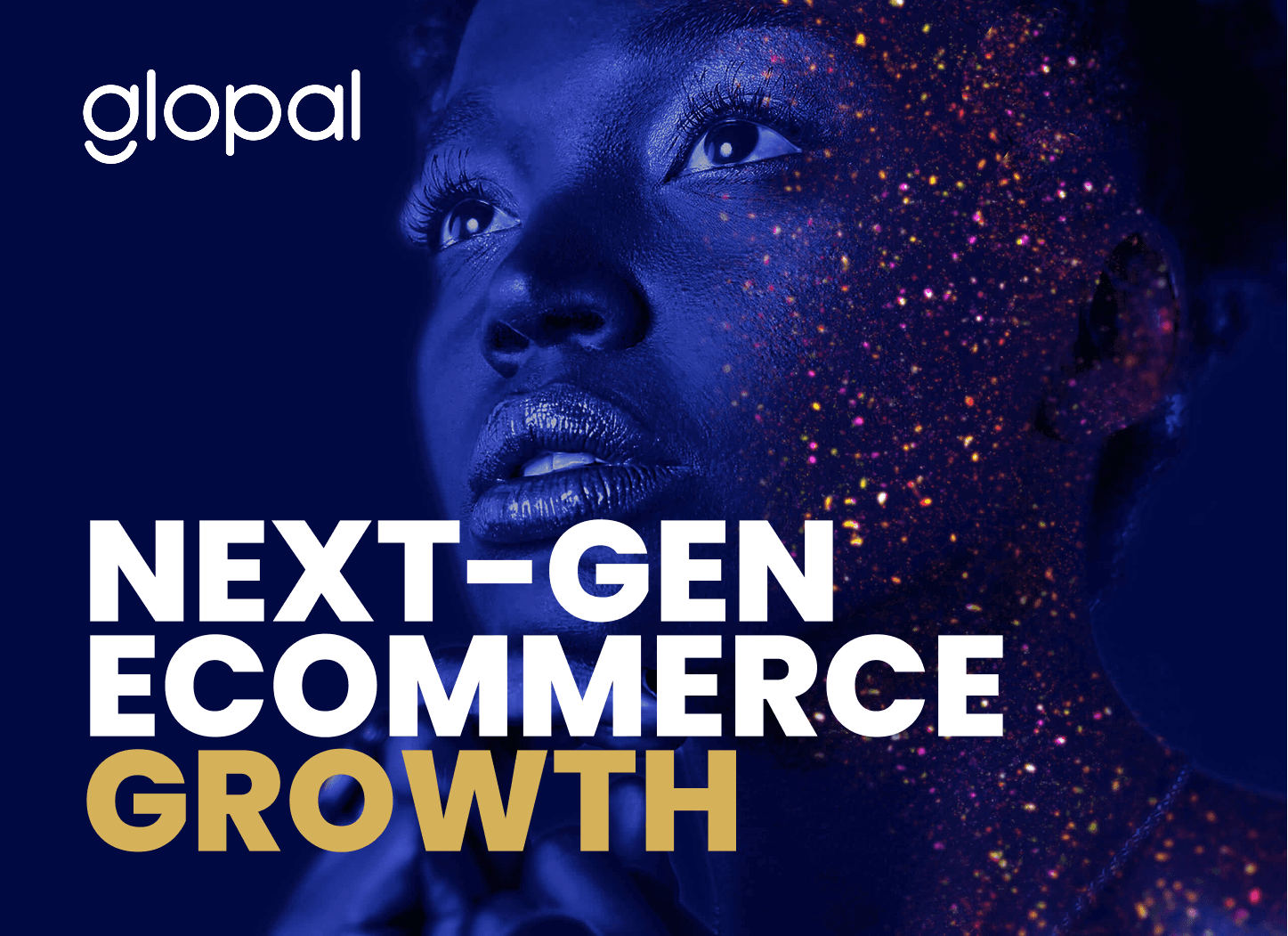
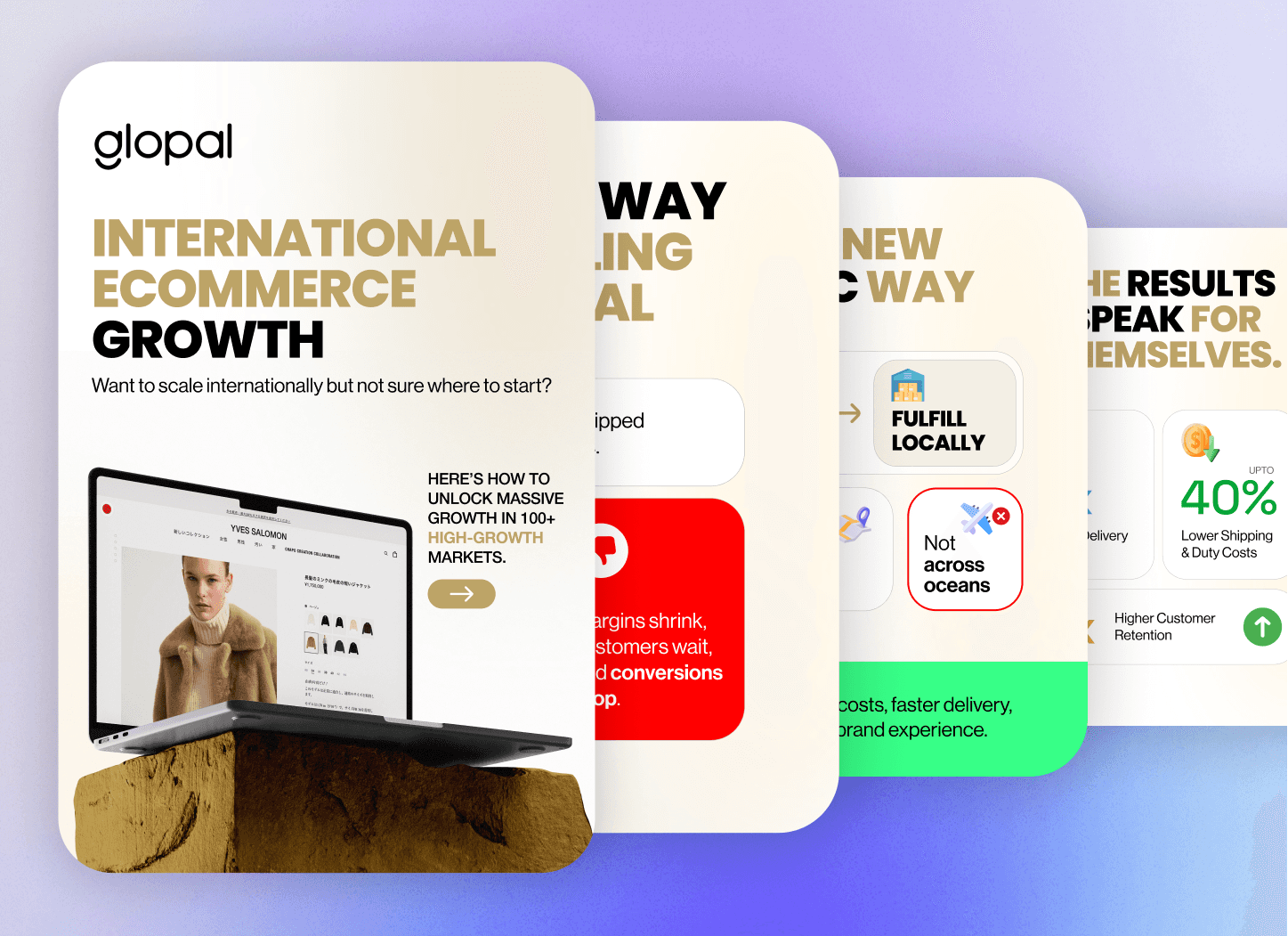
Before 2025, Glopal’s social presence was largely product-centric—informative but underperforming. Despite the brand’s strong position in cross-border commerce, its digital storytelling lacked scalability and data alignment. The content looked professional but failed to convert awareness into measurable engagement.
The goal wasn’t to simply redesign posts but to engineer a repeatable creative system that could translate complex trade, duty, and localization concepts into accessible, high-impact narratives, while tracking performance at every iteration.
This required building a Figma-based design ecosystem tightly linked to LinkedIn analytics, allowing weekly iteration cycles where visual hypotheses were validated by KPI movement, not opinions. The challenge was both design and data: transforming qualitative design language into quantifiable performance improvement.
Campaign Objective
The objective was twofold:
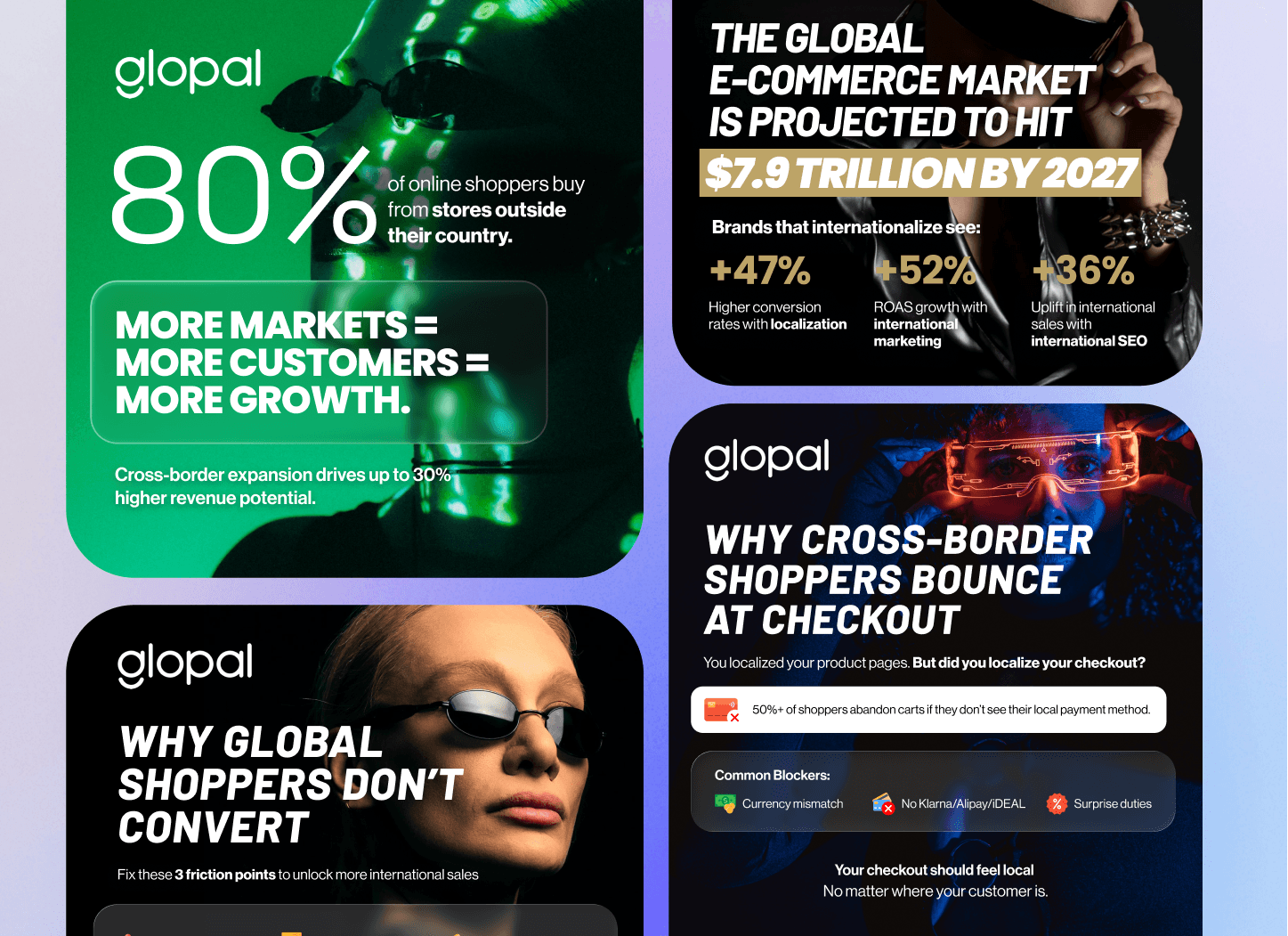
Educate the Market: Simplify complex topics (tariff ceilings, localization logic, B2B2C logistics) into concise, scroll-friendly narratives.
Quantify Creative Impact: Track how visual variables (layout density, data visualization, contrast, and copy brevity) influenced performance metrics.
Success was defined not by follower count but by engagement velocity—the ratio of impressions to interactions—and by sustaining CTR above 4% organically.
Strategically, we aligned campaigns to three content clusters:
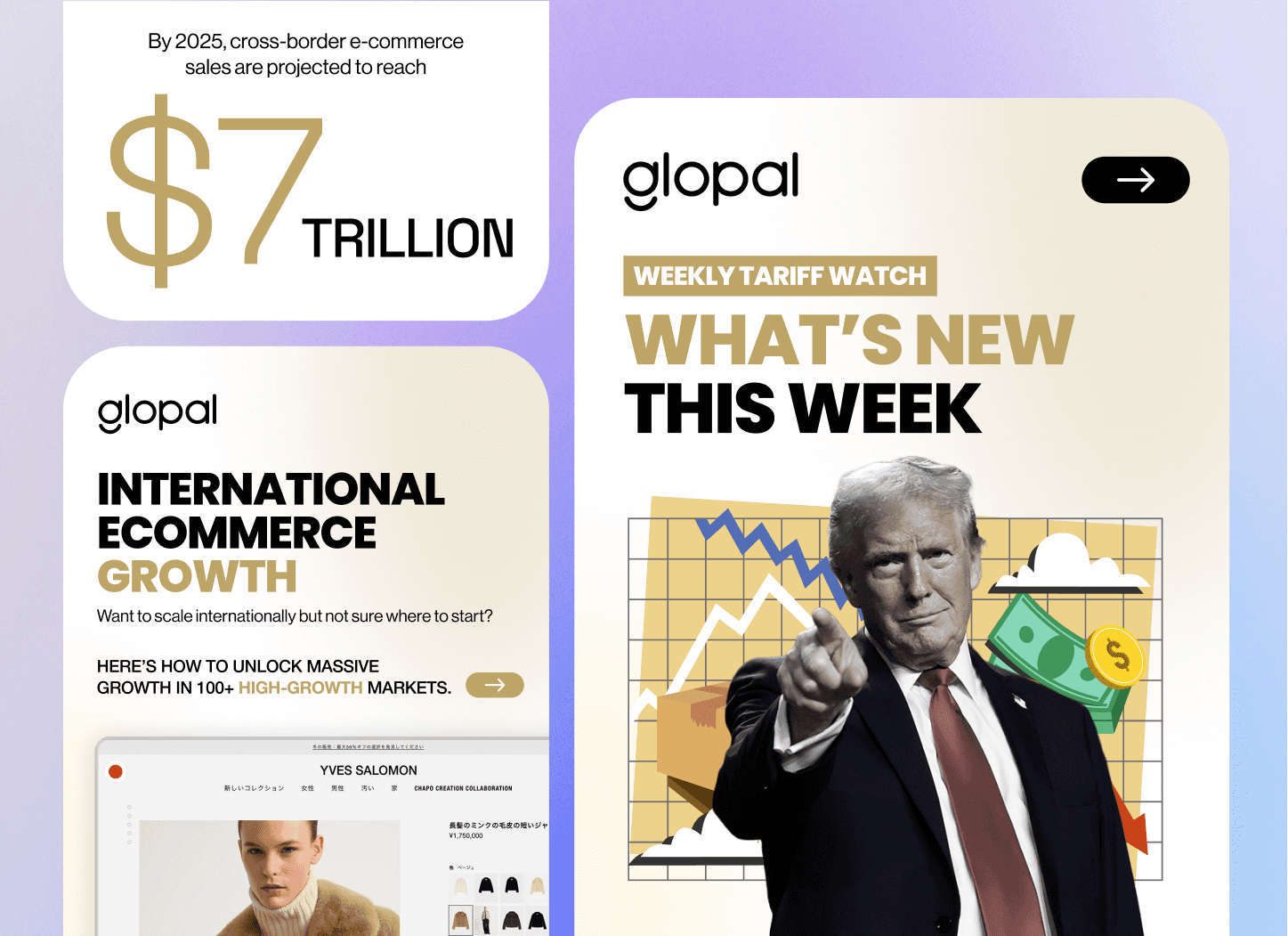
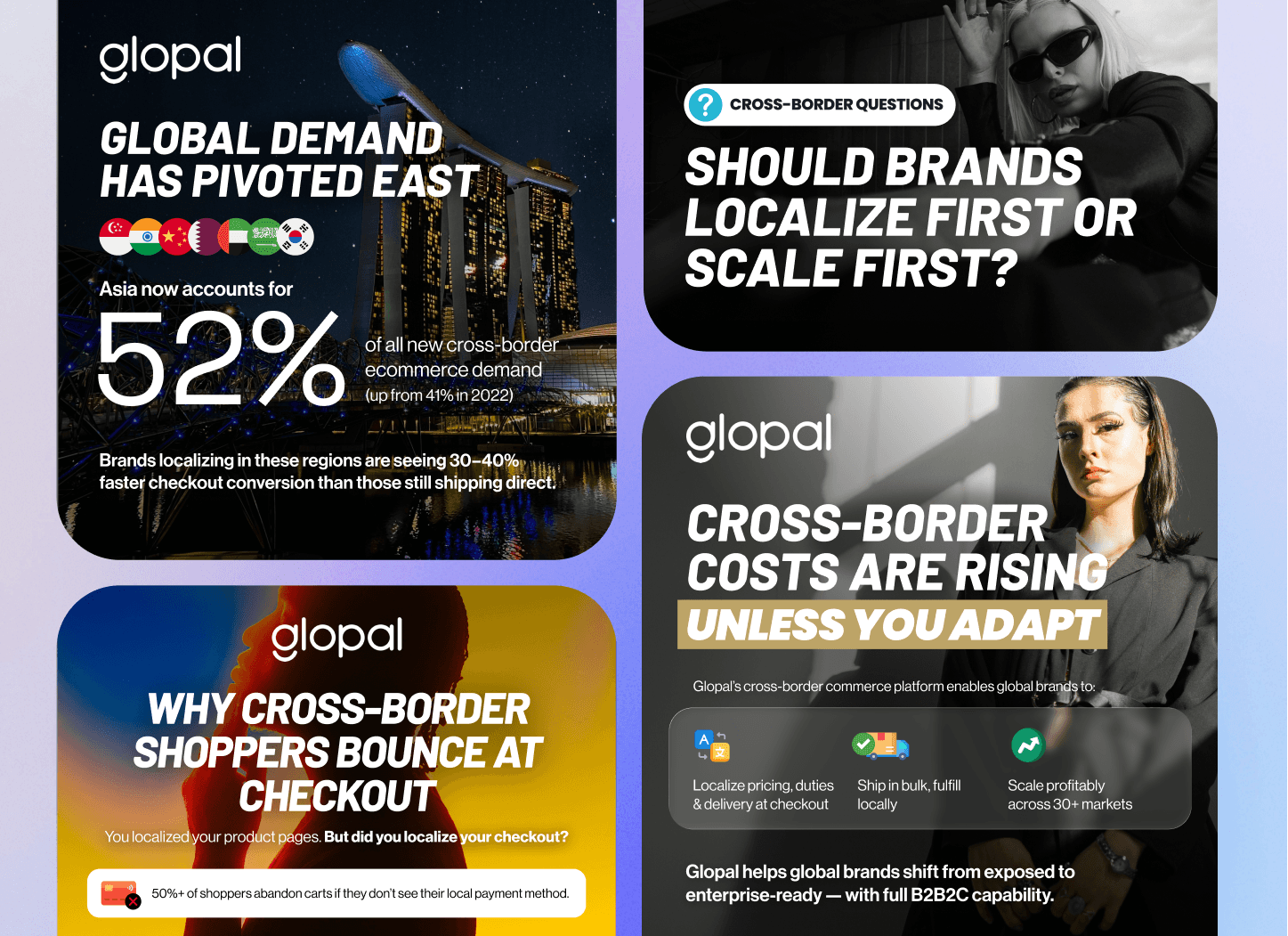
Trade Dynamics: Posts visualizing duty hikes and tariff breakdowns.
Localization Trust: Content addressing local pricing, currency, and checkout optimization.
Operational Efficiency: Logistics and bulk-fulfillment explainers positioned as thought leadership.
Creative Framework & Execution
All campaigns were developed within a unified Figma masterboard, segmented into reusable frames:
Webinar Graphics: Event key visuals optimized for both static and motion exports.
Social Graphics: Headline-centric imagery designed for thumb-pause impact at first scroll.
Ad Modules: Retargeting creatives (Feed ratio 1:1 and 16:9 versions) with simplified conversion hooks.
Regional Variations: Localized templates (e.g., UK→USA, EU→US trade examples).
Technical improvements included:
Component-based grids reducing production time by 45%.
Export automation for multi-format publishing.
Color accessibility testing for readability under mobile compression.
This infrastructure enabled consistent design language and measurable experimentation, with every post tracked as an independent “creative test case.”
Performance Metrics & Insights
Overall (Aug–Oct 2025):
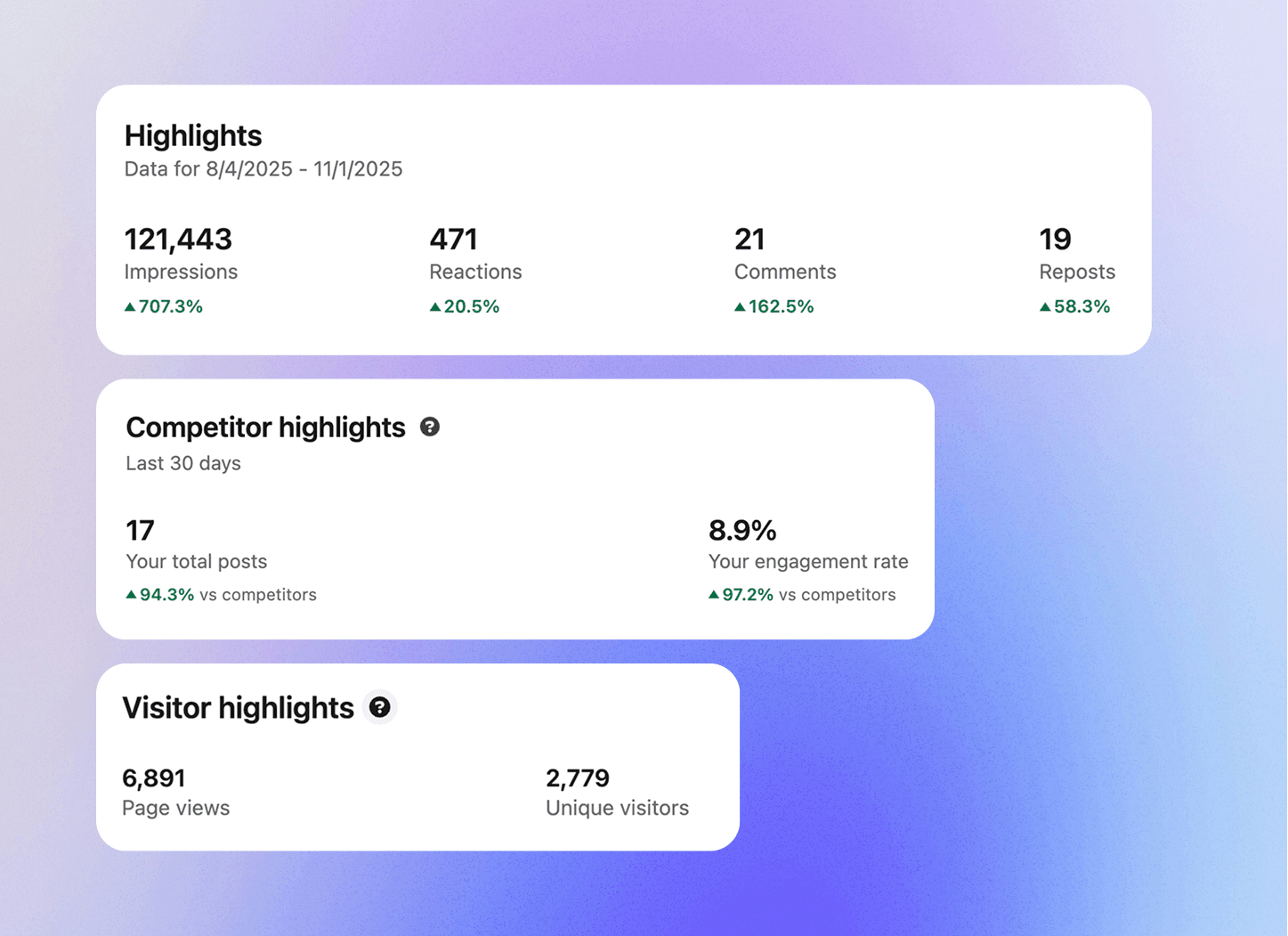
Impressions: 121,518 (+698.5%)
Reactions: 474 (+20%)
Comments: 21 (+162.5%)
Reposts: 19 (+58.3%)
Organic vs Sponsored: 14,260 / 107,258
Avg Engagement Rate: 9.2% | Top: 45%
Avg CTR: 5.1% | Top: 43.6%
Clicks/Post: 26 | Max: 496
Likes/Post: 6.9 | Max: 41
Key Correlations (from dataset):
CTR strongly correlated with visual hierarchy clarity (r = 0.72).
Posts under 50 words of text achieved 3.5× engagement over long captions.
Video posts averaged 2.4× the CTR of still graphics, especially when paired with stat overlays.
Carousels with stepwise storytelling produced 8× more comments than static single frames.
Optimization Strategy
The design process evolved into an analytical cycle:
Ideation — Concept mapped in Figma with variable typography, data points, and narrative density.
Release & Track — Each variant published with UTM-tagged assets to isolate CTR and engagement.
Review — Weekly performance snapshot in Sheets linked to post IDs and Figma frame IDs.
Iterate — Low-performing assets refactored visually; high performers abstracted into reusable templates.
Outcomes:
Average engagement uplift per design iteration: +18% week-over-week.
Median CTR stabilized above 5%, surpassing SaaS B2B benchmark averages.
Reduced content cycle from concept to live post: 3 days → 1.6 days.
This closed-loop method validated that data-driven creative iteration can outperform paid amplification, proving that good design can scale impact organically.
Reflection
The project redefined how Glopal treats design, not as static output but as a measurable growth function.
Through systemized experimentation, the team built a performance-aware design language, one capable of evolving alongside audience behavior and platform algorithms.
Glopal’s creative maturity now lies in its ability to quantify storytelling, with every post, layout, and pixel tested for engagement impact. The success of this framework provides a replicable model for other SaaS and B2B brands:
Strategy, creative, and analytics aren’t separate departments; they are layers of the same feedback system.